
IATA Pet Travel Crates: How to Choose the Right Size
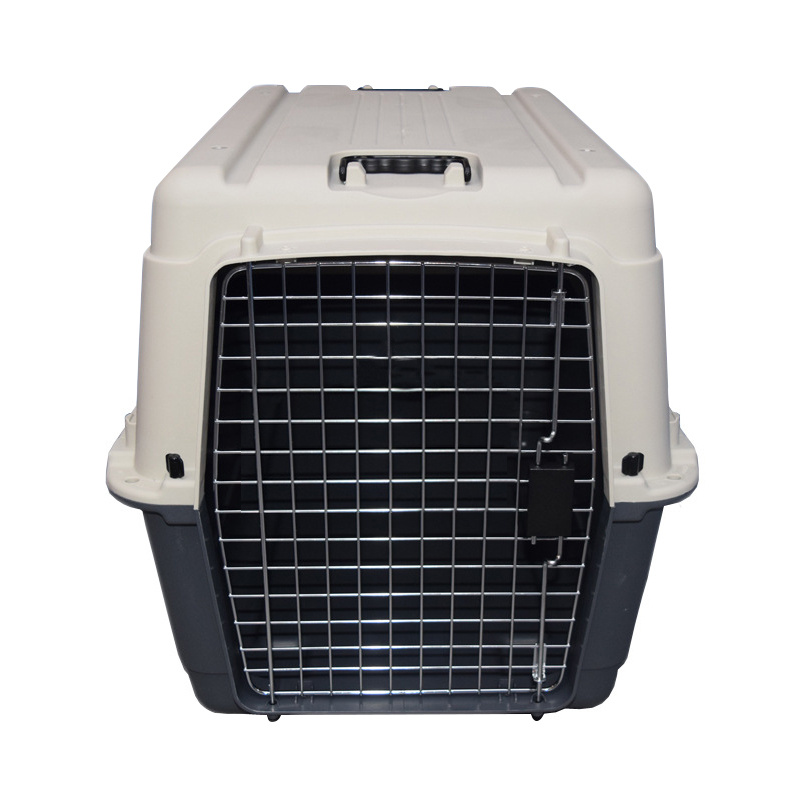
Flying with a dog or cat is a big step, and the crate is the single piece of equipment that can make or break the journey. Get it right and your pet travels safely and calmly. Get it wrong and you risk being turned away at check-in, often when it is too late to fix it.
In this guide, the Mobivet team explains what an IATA pet travel crate is, how to measure your pet step by step, and how to choose the right size so your pet is comfortable and your airline is satisfied.
What Is an IATA Pet Travel Crate?
IATA stands for the International Air Transport Association. Its Live Animals Regulations set the container standards that most airlines follow when carrying pets in the hold. When people talk about an "IATA-approved" or "airline-approved" crate, they mean a crate built to meet those standards.
In practice, an IATA-compliant crate generally has:
● A rigid, leak-proof base and sturdy construction (hard plastic, wood or metal, never soft-sided for hold travel)
● A metal door with a secure locking mechanism
● Ventilation on multiple sides, with ventilation openings that cannot be blocked
● Metal nuts and bolts holding plastic crates together, rather than plastic clips alone
● Food and water bowls that can be filled from outside the crate
● Absorbent bedding and no wheels fitted for the flight
Airlines can add their own rules on top of the IATA standard, so always confirm requirements with your carrier before you buy.
Why Crate Size Matters
The IATA rule on size is simple: your pet must be able to stand up, turn around and lie down in a natural position inside the crate.
A crate that is too small is a welfare problem and a common reason for airlines to refuse travel. A crate that is far too large is not ideal either, because your pet can be thrown around during turbulence or handling. The goal is a snug but comfortable fit.
How to Measure Your Pet for a Travel Crate
You will need a soft tape measure, a helper and a few treats. Measure your pet while they are standing in a natural position.
Length (A): Measure from the tip of the nose to the base of the tail. Do not include the tail itself.
Elbow height (B): Measure from the ground to the elbow joint on the front leg.
Shoulder width (C): Measure across the widest point of the shoulders.
Standing height (D): Measure from the ground to the top of the head or the tips of the ears, whichever is higher, with your pet standing normally.
Work Out the Minimum Internal Crate Size
Use these standard formulas to calculate the minimum internal dimensions of the crate:
Crate dimension | Formula |
Length | A + ½ B |
Width | C × 2 |
Height | D |
For example, a dog measuring 70 cm nose to tail base (A), 25 cm elbow height (B), 20 cm shoulder width (C) and 55 cm standing height (D) needs a crate that is at least:
● Length: 70 + 12.5 = 82.5 cm
● Width: 20 × 2 = 40 cm
● Height: 55 cm
In real life, always round up to the next available crate size. Manufacturers usually label crates with the dog breeds or weight ranges they suit, but your own measurements are more reliable than a size label.
Special Cases to Consider
Snub-nosed (brachycephalic) breeds
Bulldogs, Pugs, Boxers, Persian cats and other flat-faced pets can struggle with breathing, especially when stressed or warm. Many airlines recommend a crate one size larger for extra airflow, and some restrict or ban these breeds from travelling in the hold. Speak to your vet and your airline early.
Puppies and kittens
Young animals grow quickly. Measure your pet close to your travel date, not months in advance, and make sure the crate still fits.
Large and giant breeds
Very large dogs may need a custom or cargo-specific crate, and not every aircraft can accommodate them. Check the maximum crate dimensions for your route.
Cats and small pets
Cats follow the same measuring method. Choose a crate with enough room for a litter-friendly bedding setup on longer journeys, and check whether your airline allows small pets in the cabin instead.
Crate Training Before You Fly
The right size is only half the story. A crate your pet already knows and trusts makes the flight far less stressful.
● Leave the crate open at home for several weeks so it becomes a normal part of the room.
● Feed meals and offer treats inside the crate.
● Build up short periods with the door closed, then gradually lengthen them.
● Place a familiar blanket or an item that smells like home inside.
Avoid sedating your pet unless your vet specifically advises it. Sedation can affect breathing and balance in flight.
Airline Check-In: Your Crate Checklist
Before you head to the airport, confirm that:
● The crate meets your airline's size and construction rules
● All bolts are tightened and the door latches securely
● Your name, phone number and destination contact are clearly marked on the crate
● "Live Animal" labels and upright arrows are displayed
● Water is available in a bowl attached to the door, and absorbent bedding is in place
● Your pet's travel documents, microchip details and health certificates are ready
Frequently Asked Questions
What size IATA crate does my dog need?
The size depends on your dog's measurements, not just their breed or weight. Use the formulas above to calculate the minimum internal length, width and height, then choose the next size up.
Can my pet travel in a soft-sided carrier?
Soft-sided carriers are usually only allowed for small pets travelling in the cabin, and they must fit under the seat. For travel in the hold, airlines require a rigid IATA-compliant crate.
Is a bigger crate always better?
No. The crate should allow your pet to stand, turn and lie down comfortably, but excess space can lead to injury during turbulence or handling.
How early should I buy the crate?
Buy it as early as possible, ideally at least four to six weeks before travel, so your pet has time to get used to it.
Do I need a vet check before flying?
Most destinations require health certificates, vaccinations and sometimes specific tests or treatments within set time windows. Requirements vary by country and airline, so plan well ahead.
Plan Your Pet's Journey with Mobivet
Choosing the right crate is one of the most important steps in safe pet travel, and it is just one part of the process. From pre-travel health checks to certificates and advice on destination requirements, the Mobivet team is here to help you prepare with confidence.
Ready to travel with your pet? Contact Mobivet today to book a pre-travel consultation.
Disclaimer: Airline and country requirements change regularly. Always confirm current rules with your airline and the relevant authorities before you travel. This article is for general guidance and does not replace advice from your vet.
Get updates
Vaccination reminders, travel checklists, clinic news — no spam.